Collier County’s $11.6 Million “Polluted Dirt” Gamble: The Third Rail Taxpayers Shouldn’t Touch
Deadline to Reject Rail Purchase:

After examining questionable rail-to-trail proposals in Estero and Bonita Springs, USATaxFighters.org is now turning its attention to Collier County. And if the numbers are accurate, this may be the most expensive rail corridor deal yet.
Gallery of Flaws


Taxpayers Asked to Pay 111 Times the Assessed Value
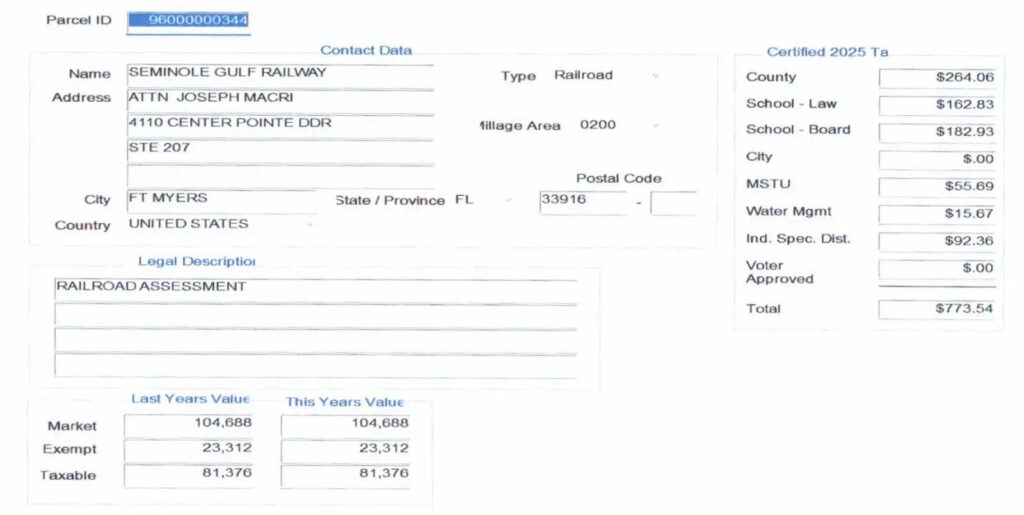
Collier County is poised to spend $11,642,069 to acquire approximately 1.5 miles of former Seminole Gulf Railway corridor, a parcel that the Collier County Property Appraiser currently values at $104,688. That means taxpayers would be paying roughly 111 times the assessed value of the property.
Let that sink in.
In an era of rising costs, traffic congestion, infrastructure demands, and ongoing debates over property tax relief, county officials are considering paying more than eleven million dollars for land that generates only a few hundred dollars a year in property taxes.
The obvious question is:
Why?


The “As-Is” Clause Nobody Wants to Talk About
The proposed purchase agreement reportedly requires Collier County to accept the property:
“AS IS, WHERE IS, AND WITH ALL FAULTS.”
That language may be common in commercial real estate transactions, but it becomes far more concerning when the property involved is a railroad corridor with more than a century of industrial use.
According to documents reviewed by USATaxFighters.org, taxpayers would assume responsibility for any environmental liabilities associated with the corridor, including potential contamination from railroad operations. The report cites risks associated with arsenic, creosote, heavy metals, and other legacy pollutants commonly found along historic rail lines.
In other words:
The railroad gets paid. Taxpayers get the cleanup bill.

The Hidden “Phase Two” Price Tag
The $11.6 million purchase price may only be the beginning.
The watchdog report estimates an additional $10.38 million in downstream expenses for:
- Track and tie removal
- Soil remediation
- Engineering and permitting
- Asphalt paving
- Parking facilities
- Safety improvements
- A potentially costly pedestrian overpass spanning Old 41 and the future Veterans Parkway expansion corridor
If those estimates prove correct, taxpayers could ultimately face a total cost exceeding $22 million before the first bike tire ever touches the trail.
That raises another uncomfortable question:
Is this really a transportation project—or a taxpayer-funded subsidy for a private asset owner?



The Railroad Keeps the Revenue
Perhaps one of the most surprising provisions highlighted in the watchdog analysis is that the railroad reportedly retains valuable revenue-producing interests associated with the corridor.
According to the report, existing utility agreements, sewer arrangements, and commercial cell tower leases remain with the railroad rather than transferring to taxpayers.
So taxpayers purchase the land.
Taxpayers assume the environmental liability.
Taxpayers pay for the improvements. Save
But taxpayers don’t necessarily receive the revenue streams.
As one observer colorfully described it:
“The railroad gets the meat and the taxpayers get the bone.”

The Reactivation Trap
Even after paying millions for the corridor and potentially investing millions more in improvements, there is another risk lurking in the agreement.
The watchdog report points to a provision that allegedly preserves the railroad’s federal right to reactivate service in the future. If that occurs, the county could be forced to surrender the corridor and any improvements built on it, receiving compensation only at depreciated value.
Imagine building a trail, bridges, crossings, and infrastructure on land that could eventually revert back to rail use.
That’s not ownership.
That’s renting with extra steps.

Roads or Recreational Trails?
Supporters of the acquisition argue that converting rail corridors into public trails can provide recreation, connectivity, and quality-of-life benefits.
Critics counter that Collier County faces far more urgent transportation challenges.
Residents continue to deal with congestion, overcrowded roadways, and growing infrastructure demands. With property tax reduction proposals already being discussed for future ballots, many taxpayers are asking whether now is the time to commit more than $20 million to a recreational corridor project.
The debate ultimately comes down to priorities:
Roads, bridges, and congestion relief—or another expensive rail-trail experiment?
Lessons From Estero and Bonita Springs
This isn’t the first time Southwest Florida taxpayers have been asked to absorb the costs of converting railroad property into recreational infrastructure.
USATaxFighters.org has previously examined rail corridor proposals involving Estero and Bonita Springs. Critics of those projects raised many of the same concerns now emerging in Collier County:
- Environmental liabilities
- Long-term maintenance costs
- Questionable taxpayer value
- Public subsidies benefiting private interests
- Uncertain transportation benefits
Now the same questions are being asked again—only this time the price tag appears significantly larger.
The July 13 Deadline
According to the documents reviewed, Section 6 of the agreement provides a due-diligence and inspection period ending July 13, 2026, during which the county may still terminate the transaction.
That means taxpayers still have an opportunity to demand answers before millions of public dollars are committed.
Questions that deserve public discussion include:
- Why is the county paying 111 times the assessed value?
- What environmental liabilities are taxpayers inheriting?
- How much will the full project actually cost?
- Why are revenue-producing assets excluded?
- What protections exist if rail service is reactivated?
- Why hasn’t a project of this magnitude been placed before voters?

Final Thoughts
Government officials often talk about transparency, accountability, and protecting taxpayer dollars.
This deal offers a chance to prove it.
Before Collier County spends $11.6 million on a former rail corridor—and potentially millions more afterward—residents deserve a full public accounting of the risks, liabilities, and long-term costs.
Because once the check is written, taxpayers may discover that what looked like a trail project was actually a very expensive lesson in why due diligence matters.
And unlike a bicycle trail, there may be no easy way back.
The Lee County Taxpayers Association (LCTA) has uncovered what may become one of the largest concealed taxpayer liabilities in Estero history.
After filing formal Public Records Requests under Florida Sunshine Law, our watchdog investigators obtained the executed railroad purchase agreement between the Village of Estero and The Trust for Public Land involving the abandoned Seminole Gulf Railway corridor. What Estero taxpayers were never properly shown before the vote is deeply alarming.
Estero Politicians Approved a $19.79 Million Purchase for Property Appraised Around $330,000
According to Lee County Property Appraiser records, the 4.1-mile railroad corridor carries a tax assessment of approximately $330,362. Yet Estero Village leadership committed taxpayers to paying $19,792,209 in cash reserves for the property.
That represents an astronomical premium over assessed value.
Worse, Village officials reportedly distributed public agenda packets before the March 2026 vote without attaching the full purchase contract for public inspection.
Taxpayers were expected to trust politicians without seeing the actual legal agreement.
The Real Cost Was Never Fully Disclosed
Now we know why. The initial $19.79 million acquisition price is only the beginning.
Our watchdog audit identified an estimated additional $56.4 million in downstream liabilities tied to:
Environmental contamination cleanup
Removal of railroad tracks and ties
Six mandatory overpass bridges
Long-term maintenance and operational expenses
Combined taxpayer exposure could exceed $76 million.
This financial reality was never transparently presented to residents before approval.
Estero Taxpayers Could Face a 45.7% Municipal Property Tax Increase
Because Estero officials are draining nearly half of the Village’s cash reserves to acquire the corridor, future project phases may require substantial property tax increases.
The LCTA tax analysis estimates taxpayers could eventually face:
A +0.3333 mill increase
Approximately 45.7% higher municipal property taxes
Decades of additional taxpayer obligations
To help residents understand the impact on their own homes and businesses, the Lee County Taxpayers Association has released an Estero Rail Trail Tax Increase Calculator.
Hidden Contract Clauses Raise Serious Concerns
The executed agreement also contains troubling provisions that many residents never had the opportunity to review before the deal was approved.
730-Day Salvage Delay
The railroad reportedly retains up to two years after closing to remove infrastructure from the property.
That means taxpayers pay nearly $20 million immediately while potentially being blocked from using or developing the property until 2028.
“AS IS” Environmental Liability
The contract reportedly transfers environmental remediation risks directly to taxpayers under “AS IS, WHERE IS” language.
After more than a century of industrial railroad operations, cleanup costs could be substantial.
Escalating Construction Inflation
The mandatory delays built into the agreement may also expose taxpayers to rising construction, labor, and bridge material costs for years before meaningful development can even begin.
Taxpayers Deserve Transparency — Not Backroom Deals
The Lee County Taxpayers Association believes residents deserve:
Full public disclosure of major contracts
Independent appraisals before massive expenditures
Honest long-term financial projections
Transparent public debate
Voter approval before major long-term tax burdens are created
This is no longer simply about a trail project.
This is about government transparency, fiscal accountability, and protecting hardworking property owners from hidden financial obligations negotiated behind closed doors.
The Lee County Taxpayers Association will continue exposing the facts, publishing the documents, and fighting for taxpayers across Southwest Florida.